Shopify merchants and ecommerce agencies
The store needs better product pages, but the team still has to protect checked product details, review decisions, and publishing control.
Loading the current XEVRIN page. It will open automatically.
Shopify product page optimization works better when the team reviews the facts, buyer answers, FAQs, images, and approval status before content reaches the store.
The store needs better product pages, but the team still has to protect checked product details, review decisions, and publishing control.
Weak product data, supplier copy, unclear specs, and disconnected review notes make Shopify product updates slower and less trustworthy.
Use product files, current Shopify pages, source notes, manufacturer details, and review policy to prepare approved product-page improvements.
Compare the current blocker with the result your team can review.
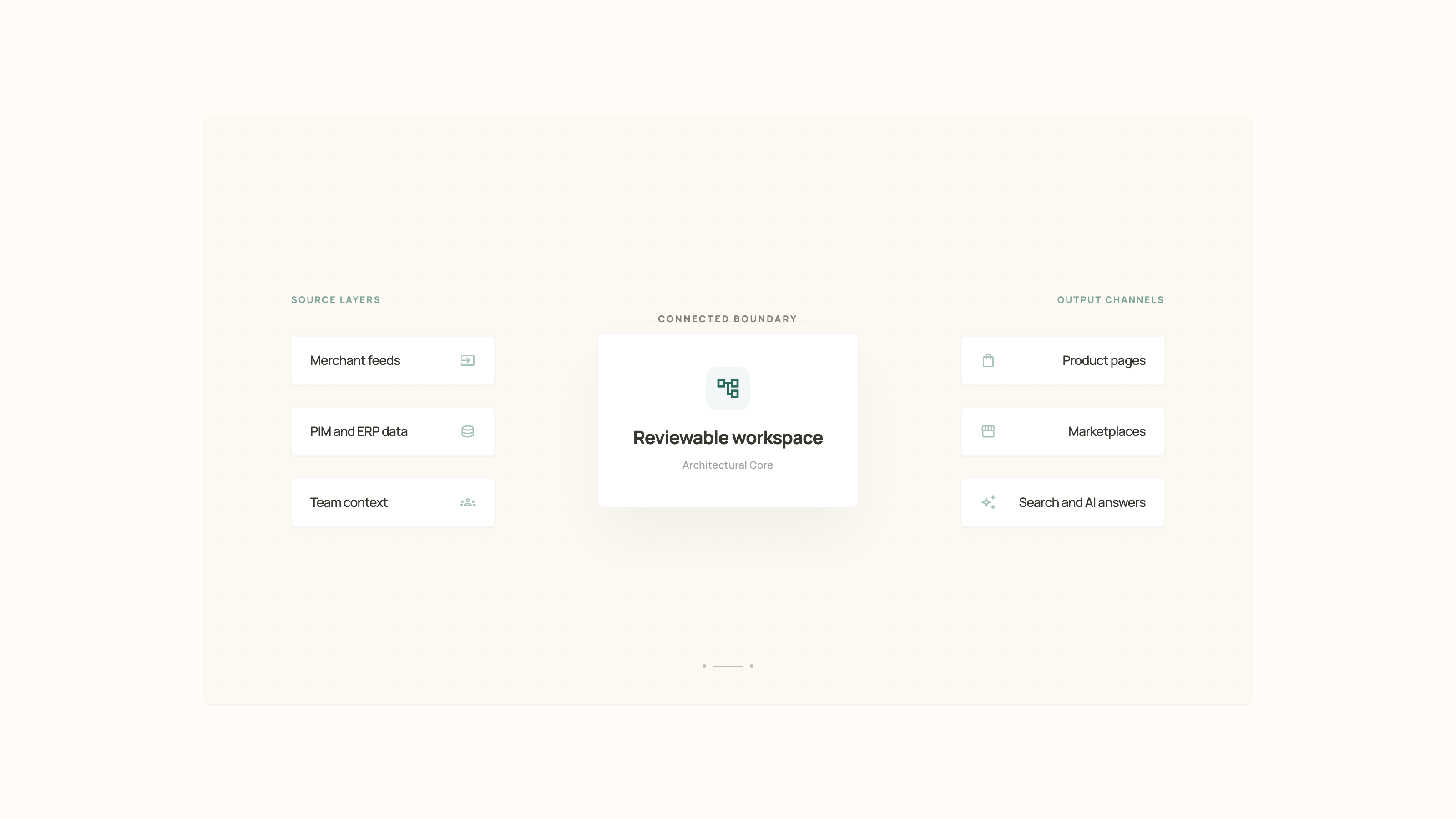
The outcome should be clear enough for sales, merchandising, or client review.
Prepare titles, summaries, highlights, descriptions, specs, and FAQs from reviewed product details.
Separate suggested facts, draft copy, images, and approved output before store changes.
Move reviewed work into a file or supported Shopify update path without promising broad automated publishing.
Choose the next page based on what the buyer needs to prove.
See the basic inputs and output.
See what setup needs first.
Inspect real example pages.